
Evangelizing through Architecture, Beautiful Vestments and Jeremiah's Underpants.

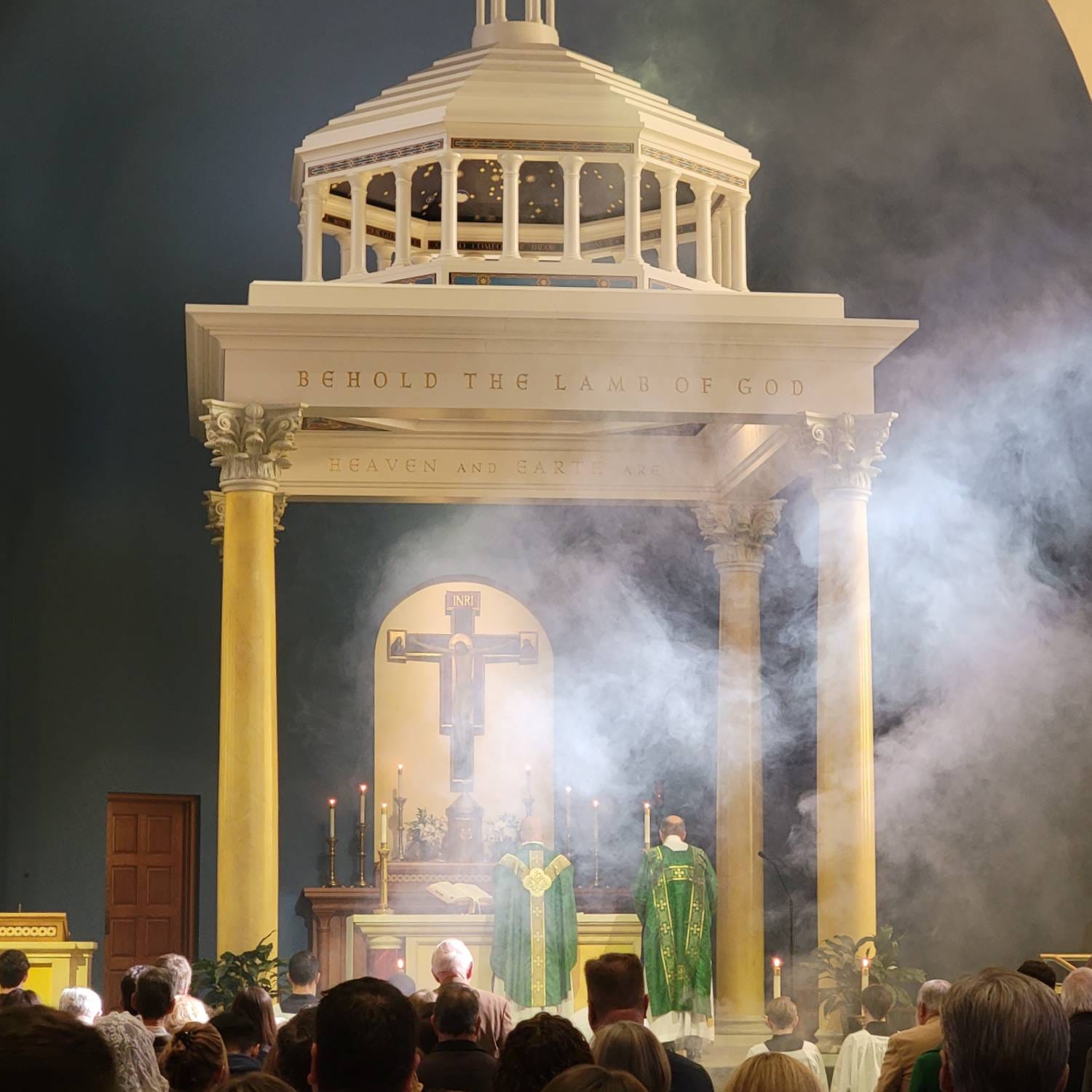
Yesterday as we were getting ready to celebrate the 10:30 Solemn Mass at Our Lady of the Rosary, Greenville, I spotted four young guys in white shirts, ties and name tags heading across the parking lot. As they entered the church I asked if they were visitors. “Yessir. First time.”
So the usher squeezed them in—finding the few remaining seats in the front row. They were very attentive and reverent all through the Mass and hung around afterward admiring the church. Figuring that they would have a good Biblical knowledge (We’re in the buckle of the Bible Belt in Greenville SC) I explained how the Catholic Church architecture reflects the Biblical pattern. I’ve written on the subject here and here and here. There is also a fair bit on content on the subject in my book Letters on Liturgy.
The guys responded enthusiastically to the parallels in our church to the Old Testament tabernacle and temple and were curious about “That gold box up there”. It was an opportunity to evangelize with architecture in a specific way. I gave them the short version, but when I am giving the church tour to other Bible Christians I have much more to say about the symbolism of the architecture itself—how the sanctuary points to heaven our final home, how the gospel square—(our version of the nave pulpit) symbolizes the Son of God coming down from heaven in the incarnation…and more.
More than the specific symbols in the church, however, is the importance of beautiful Catholic architecture for a much broader understanding of evangelization. One of the strongest marks of authenticity is the impact the Catholic Church has had on Western culture. People searching for the truth are awestruck by the great cathedrals, churches and works of Catholic art, literature, music and drama. I have written here about how liturgy properly celebrated is a compendium of culture.
I hope those four young guys return for another visit. I think they represent a whole generation of young men hungry for the depth, the stability, the beauty, truth and goodness of the Catholic faith.
Beautiful Vestments
Speaking of beauty in the Mass, many non-Catholics question the ecclesiastical finery on display. “Why do y’all wear those fancy robes?” I have answered the question from Scripture here, and when we were in Ravenna in May I was moved to see the mosaics of St Appolonaris from the fifty century portrayed wearing priestly vestment just like the ones I wear. I wrote about this visit last week here.
I appreciate the significance and importance of clerical vesture, but I, for one, couldn’t help be impressed (in a negative way) but how over the top the ecclesiastical garb was in the recent schismatic episcopal consecrations in Switzerland and Scotland. It would seem that the amount of ecclesiastical clobber is in direct inverse proportion to the authenticity of the episcopal orders. As an illustration, here is a picture of Papa Rutherford aka “Pope Radislav I”.
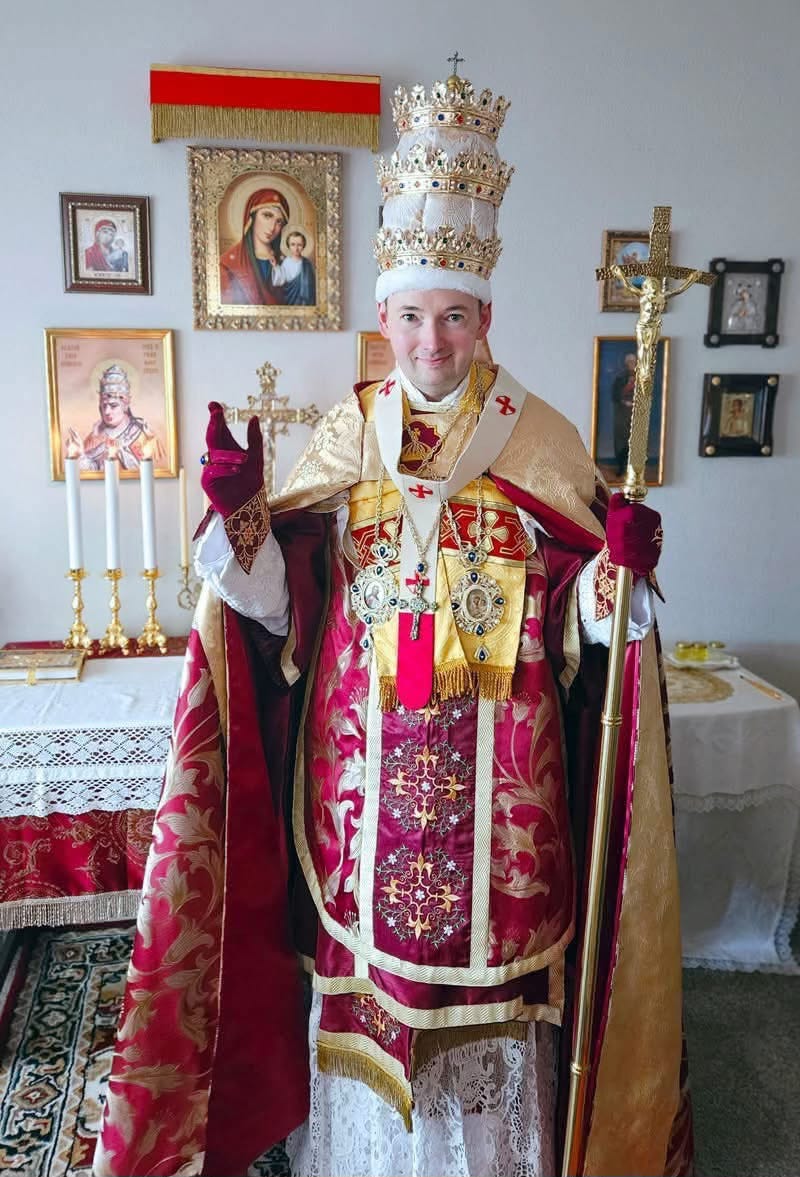
If you’re interested to learn more about Papa Rutherford you can connect to his website here.
Jeremiah’s Underpants
Which leads me to today’s click-bait. If you didn’t hear it or read it, today’s Old Testament lesson at Mass was that passage from Jeremiah 13—a parable about the prophet’s underwear.
1 The Lord said to me: Go forth and purchase for yourself a loincloth. Wrap it around your loins, but do not dip it in water. 2 I purchased the loincloth as instructed by the Lord and wrapped it around my loins.
3 Then the Lord spoke to me a second time, saying: 4 Take the loincloth that you purchased and are wearing, and go now to the Euphrates and conceal it there in a cleft of the rock. 5 So I went to the Euphrates and hid it as the Lord had commanded me.
6 After a long period of time, the Lord said to me: Go now to the Euphrates and retrieve the loincloth that I instructed you to hide there. 7 And so I returned to the Euphrates and searched for the cleft, and I then retrieved the loincloth from the place where I had hidden it. But the loincloth had now rotted and was good for nothing.
8 Then the word of the Lord came to me: 9 Thus says the Lord: In the same way I will ruin the pride of Judah and the enormous pride of Jerusalem. 10 Because these wicked people refuse to listen to my words and stubbornly follow their own inclinations as they run after other gods to serve them and worship them, they will become like this loincloth, which is good for nothing. 11 For just as a loincloth clings to a man’s loins, so I made the whole house of Israel and the whole house of Judah cling to me, says the Lord, in the hope that they would become my people, my praise, and my pride. But they refused to listen.
It’s an earthy parable to be sure, and the lesson is clear. The sins of the people amount to a smelly pair of rotten underwear. But here’s the kicker: Isiah uses a similar metaphor. In Isaiah 64:6 the prophet cries, “But we are all as an unclean thing, and all our righteousnesses are as filthy rags; and we all do fade as a leaf; and our iniquities, like the wind, have taken us away”
If Jeremiah’s image of soiled underwear was vivid, Isaiah’s is even more shocking because the “filthy rags” are understood to refer to menstrual rag—not only bad smelling, but doubly unclean to the Jews because they could not touch blood.
And Isaiah’s image piles more shock onto that because he says it is not our sins which are a filthy rag, but our righteousness. In other words, God is so dismayed by our sin, and unfaithfulness that even our attempts at being good are revoting to him. So, if you like, our self righteousness is even worse than our sin.
Coming back to clothing and vestments, Jesus has a similar observation about the religious leaders: “Watch out for the teachers of the law. They like to walk around in flowing robes and be greeted with respect in the marketplaces, and have the most important seats in the synagogues and the places of honor at banquets.” (Mk.12:38)
Anyhow—I will leave it to my readers to connect the dots. The vestments we wear as clergy are part of the tradition, and most clergy enjoy the vestments and uniforms of office, but I’m always wary of the clergy who put too much emphasis on the finery. It’s too easy to be “all hat and no cattle”. (Said he who sometimes wears a saturno)
The authenticity and simplicity (or not) are evident when Father is doing his pastoral, catechetical and administrative work. I have to always ask myself, “Does my willingness to get down on my knees, say my prayers and roll up my sleeves and get out there and do the work of Jesus in the world match up to my liturgical finesse, my preaching, writing and public priestly persona—or am I like the self righteous scribes Jesus was warning about?
May the Lord forgive my own hypocrisy. Just sayin’